
TellyStudio Setup Guide
TellyStudio IPTV Multi-Device Setup: How to Plan Screens, Apps and Home Network in 2026
Learn how to plan a TellyStudio IPTV multi-device setup in 2026, including screen planning, compatible apps, network checks, account details, troubleshooting and FAQs.
Why a Multi-Device Plan Is Better Than Repeating the Same Setup
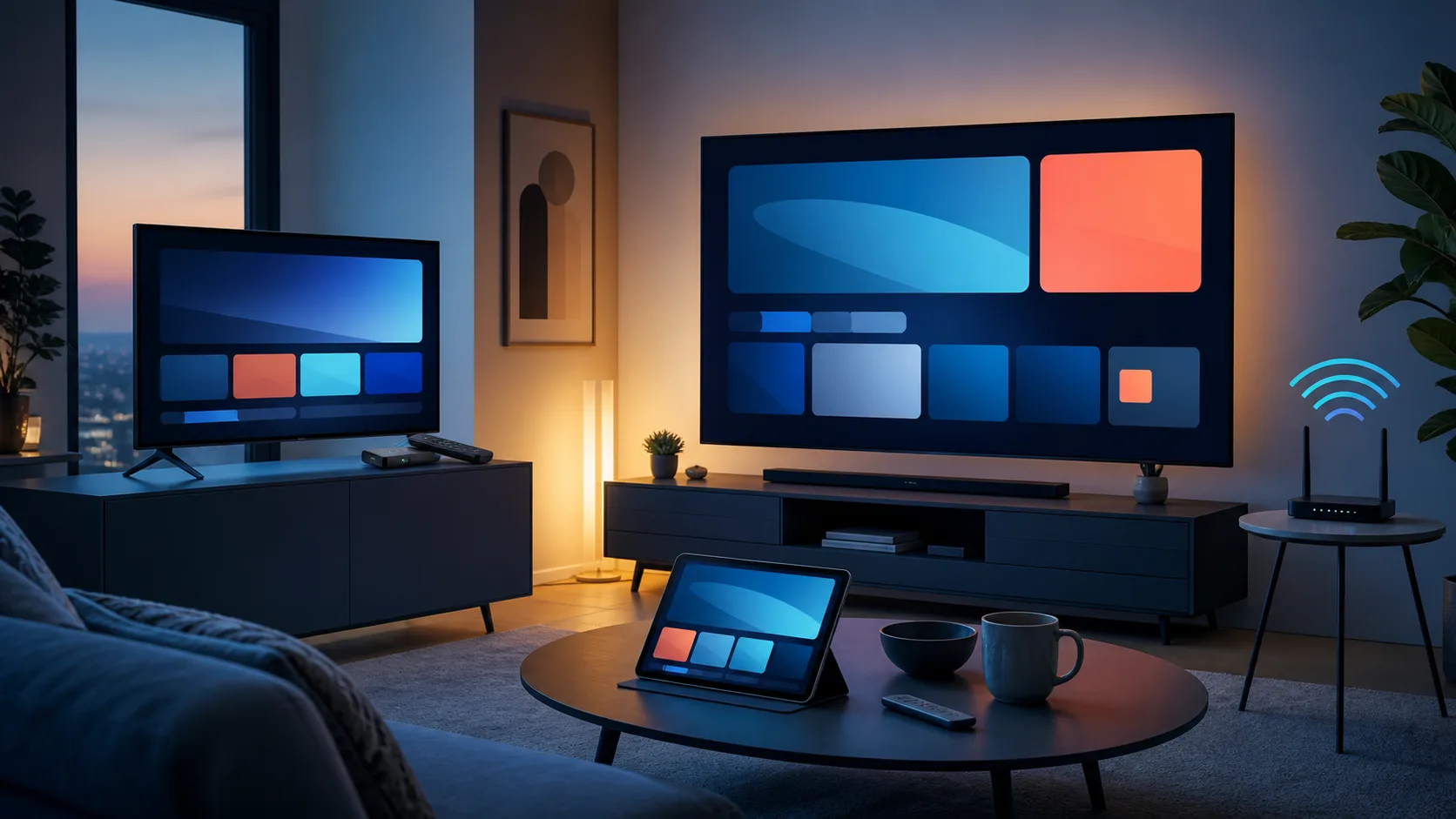
A multi-device IPTV household is not simply one installation copied several times. A living-room television, a bedroom screen, a phone and a laptop may use different operating systems, different app stores and different network conditions. The most reliable TellyStudio IPTV multi-device setup begins by deciding what each screen is for, then choosing the lightest compatible setup for that job. This avoids the common mistake of trying to force one app, one control method or one set of assumptions onto every device.
The first decision is whether the screens will be used at the same time or at different times. That distinction matters because a subscription, app and network can have separate limitations. Never assume that adding a second device automatically means two simultaneous streams are included. Check the plan terms and ask support about the permitted use before you build a household routine. TellyStudio can help confirm setup details, but the service should not be described as guaranteeing unlimited concurrent playback.
A good plan also separates the subscription service from the player application. The service supplies the access details; the player provides the interface that loads live categories, guide data or on-demand libraries where available. The M3U vs Xtream Codes guide explains why the format supplied by a provider can change the cleanest app choice. Understanding that division makes troubleshooting faster because you can identify whether a problem is with the device, the player, the network or the account information.
The three questions to answer first
List the screens, decide which one is primary, and confirm whether the same access is intended for one active screen at a time or a permitted multi-screen arrangement. Then note the operating system and the app store available on every device. These three answers create a useful brief for support and prevent vague requests such as asking whether IPTV works everywhere without naming the actual hardware.
Build a Screen Inventory Before You Install Anything
Start with a small table or note. For each screen, record the room, device type, operating system, connection method, preferred viewing role and the app you expect to test. A Smart TV may be the main screen, an Amazon Fire TV Stick may be used in a second room, and a phone may be used for occasional personal viewing. Record those as separate environments even if they all display the same service. This makes it obvious which device needs an app-store installation and which one may need a different login flow.
The inventory should include the model year or generation when you know it. Older televisions can have limited app support, slower processors or less storage for guide data. Streaming sticks can differ in Fire OS behavior, remote navigation and available applications. Android TV boxes can vary in certification and firmware quality. The best devices for IPTV article is useful for comparing broad device categories, while the installation guide gives device-specific preparation steps.
Do not put passwords, payment details or complete playlist URLs into a public spreadsheet. Keep sensitive credentials in a private password manager or the original support message. The inventory only needs a safe label such as living-room TV or bedroom stick, plus the device type and app name. If support needs to investigate, send the minimum necessary information through the official contact route and avoid forwarding credentials to unrelated people.
A practical inventory template
Use these fields: room, device model, operating system, wired or Wi-Fi connection, app store available, preferred player, screen priority, and last tested date. Add a note for whether the device is used for live viewing, catch-up or occasional travel. The purpose is not administration for its own sake; it is a way to make a future renewal, app change or support request much easier.
Choose Compatible Apps and the Right Login Format
Once the screens are listed, choose apps by operating system and input method rather than by popularity alone. A remote-friendly television interface should prioritize large controls, quick category loading and a readable guide. A phone app can prioritize touch gestures and mobile playback. A laptop may work better with a desktop player that handles a playlist cleanly. If the app does not support the credentials or playlist format you received, it is the wrong fit even if reviews describe it as excellent.
The two most common setup formats are an M3U playlist URL and Xtream Codes-style server, username and password fields. They can expose similar content through different workflows, but they are not interchangeable fields. Read the M3U vs Xtream Codes comparison before asking support to resend details. Entering a server URL into an M3U field, or an M3U URL into a username box, can create an error that looks like an account problem but is really a setup mismatch.
For Fire TV households, app selection deserves a separate check because store availability, operating system updates and remote behavior can change. The best IPTV apps for Firestick in 2026 guide explains how to assess a player without confusing the player with the service. Use official app stores or the publisher's verified instructions, follow local law and the app's terms, and avoid random download pages promising unauthorized access to copyrighted broadcasts.
Check the Home Network for the Real Household Load
A multi-device plan succeeds or fails on the network that connects the screens. The important variables are stability, distance from the router, Wi-Fi congestion, router placement and the number of other devices using the connection. A household can have a high headline speed and still experience interruptions if the router is hidden in a cabinet, the television is at the edge of coverage or a second screen is competing with backups and downloads.
Test the primary screen at the time you normally watch. Run a speed test near the television, then repeat it near the secondary screen. Compare wired Ethernet, strong 5 GHz Wi-Fi and a crowded 2.4 GHz connection where possible. The goal is not to chase a particular advertised number; it is to find a stable path with enough headroom for the quality you intend to use. If you plan more than one active stream, confirm that the service permits it and test both screens under realistic conditions.
Before changing apps, reduce avoidable network pressure. Pause large downloads, update router firmware from the manufacturer's official instructions, move the router into a more open position and restart the network equipment in a sensible order. If only one device buffers while others work, the cause may be local Wi-Fi or that device's app cache. If every screen fails together, record the time and error pattern before contacting support. The IPTV setup checklist provides a useful pre-viewing sequence.
Do not promise what the network cannot prove
A single speed-test result does not prove that a household can run every screen at maximum quality. Network performance changes with time, interference and other traffic. Describe your test honestly, note whether a device was wired or wireless, and use the trial period to check the exact combination of screen, app and connection before committing to a longer plan.
Install in an Order That Makes Troubleshooting Simple
Install the primary screen first. Connect it to the strongest available network path, install one compatible player and add the access details carefully. Test a live category and one other available section before adding a second device. This creates a known-good baseline. If you install four screens at once and then see an error, you will not know whether the issue comes from a typo, an unsupported app, a weak signal or a service-side check.
Add the secondary screen only after the primary test is complete. Use the same terminology in your notes: write down the exact app name, login format and date tested. Do not repeatedly delete and re-add a working profile because a guide is loading slowly; allow the player to finish its initial refresh, then test navigation. If you need a device-specific walkthrough, use the relevant Smart TV, Android, Fire TV Stick or other installation guide instead of relying on a generic video with unknown credentials or links.
Finally, test the mobile or laptop device for its intended role. Mobile playback may use a different network from the home television, and a laptop may be behind a firewall or browser extension that affects playback. Keep the test small and lawful: verify that the app opens, the supplied profile loads and the available content behaves as expected. TellyStudio support can review the device, app and country details when the setup does not behave normally.
Maintain the Setup and Prepare for Renewal
A multi-device setup is easier to maintain when every screen has a clear owner and purpose. Once a month, check for operating-system updates, remove apps you no longer use, refresh guide data only when needed and confirm that the remote still responds normally. Do not make several changes at once if playback is already working. Small, documented maintenance is safer than a complete reset that loses settings and creates a new problem.
Keep a private record of the activation date, expiry date, plan term, preferred app and device list. That record is more useful than a vague note saying the subscription is nearly finished. The TellyStudio IPTV renewal guide explains how to audit the account before extending access, while the choose the best IPTV plan guide helps compare the viewing pattern and term you actually need. Renewal should be a deliberate check, not an emergency purchase made after a screen stops working.
If the app is updated or a television is replaced, do not assume the old installation will transfer perfectly. Record the new device model, install a compatible player from a trusted source and ask support whether any device-specific step needs to be repeated. Keep your previous working setup available until the new one passes its tests. That approach protects the household from a single failed experiment on the night everyone wants to watch.
Troubleshoot One Screen at a Time
When one screen fails and the others work, start locally. Confirm the device is online, reopen the app, check that the selected profile is still present and test the same network with another app. Then verify the login format and look for accidental spaces. Avoid changing the router, app and credentials simultaneously because you may remove the evidence that identifies the cause.
When every screen fails at the same time, check whether the home internet is down and whether the account or subscription term needs review. Note the exact time, the devices affected, the app used and the wording of any error. The IPTV app not working guide gives a structured sequence for common playback issues. Send support a concise summary rather than a series of screenshots with no context.
If a device reaches the menu but a particular item will not play, do not conclude immediately that the whole setup is broken. Playback can be affected by the selected item, temporary network conditions, app compatibility or the availability rights in your territory. Use authorized services and legitimate content, then ask support for a compatibility check. Good support starts with accurate observations, not a promise that every device or stream must behave identically.
TellyStudio Multi-Device Setup FAQs
The questions below cover the points that usually create confusion when a household adds a second or third screen. The safe answer is always tied to the actual plan, device, app and network rather than a blanket promise about unlimited access.
If you are preparing a new household, begin with one primary screen, document the working setup and expand carefully. That gives you a clean reference point for future app changes, renewals and support conversations.
FAQ
Can I use TellyStudio IPTV on multiple devices?+
Compatible devices may be configured, but permitted simultaneous use depends on the selected plan and service terms. Confirm the exact multi-device arrangement with TellyStudio support before relying on concurrent streams.
Which devices can be part of a TellyStudio multi-device setup?+
Common compatible categories include Smart TV, Fire TV Stick, Android TV, MAG Box, Chromecast, iPhone, iPad, Android, Windows and macOS. App and operating-system support can vary by model and region.
Do all devices need the same IPTV app?+
No. The best app can differ by operating system, remote control and supplied login format. Choose a compatible player for each screen and keep a private record of the working setup.
Does multi-device IPTV require faster internet?+
It can require more network capacity when more than one stream is active, but stability, router placement and Wi-Fi quality matter as much as headline speed. Test the actual screens under normal household use.
What should I send TellyStudio support if one device fails?+
Send the device model, operating system, app name, country, error message, network type and whether other devices still work. Do not share sensitive credentials publicly.
Final CTA
List your devices, confirm the permitted use of your plan and test one screen at a time. Use the installation guides or contact support when a device-specific check is needed.